Coldwell Banker R.M.R. Real Estate, Brokerage

Coldwell Banker R.M.R. Real Estate, Brokerage

Saturday, 15 October 2016

6 Reasons Your Agent Wants You Pre-Approved Before Showing You Homes

6 Reasons Your Agent Wants You Pre-Approved Before Showing You Homes


Ever had an agent deny to show you a home because you weren’t pre-approved for a mortgage? It’s not because they’re mean, or they don’t value your business… it’s actually because they’re looking out for your best interests.
Let’s face it, shopping for a home before getting pre-approved for a mortgage is like walking into a grocery store without a wallet. You may have the desire to buy, but you lack the ability. Let’s cover some basics…

What is a mortgage pre-approval?

In a nutshell, a mortgage pre-approval is written assurance from a lender or broker that you’re able to borrow money to purchase a home up to a certain amount. It’s based on the income, employment and asset documentation you supply at the time of application, in conjunction with your credit history.

5 reasons to get pre-approved

1. It carries more weight than a “pre-qualification”.

pre-approval differs from a pre-qualification. With the former, the lender has actually checked your credit and verified your documentation to approve a specific loan amount (usually for a particular time period such as 30, 60 or 90 days). A pre-qualification can be useful as an estimate of how much you can afford to spend on your home, but it’s a less accurate indicator of your ability to purchase. A pre-approval always carries more weight.

2. You’ll know how much house you can afford.

Getting pre-approved before you begin house hunting allows you to know how much house you can realistically afford. Knowing this narrows down the options and makes the selection process more efficient. Not to mention, it protects you from the unpleasant surprise of realizing the home you fell in love with doesn’t fit your budget.

3. It adds clout to your offer.

In many markets, homes attract more than one offer. If the sellers are weighing one offer against another, they may lean towards the one accompanied by a pre-approval letter. That’s because pre-approvals instill confidence that the buyer is financially capable of purchasing their home.

4. It could increase your negotiating power.

In addition to strengthening your offer when compared to buyers who haven’t taken this step, getting pre-approved may give you the upper-hand when negotiating the price. If the homeowner is eager to sell, they may be more willing to accept a lower offer from someone they’ve been assured is financially capable of purchasing their home.

5. It saves time.

Obtaining a mortgage is a lengthy process. Getting pre-approved ahead of time shortens the time between contract to close — this way you’re ready to proceed with finalizing the mortgage once you’ve found the home you want to purchase.

6. Without it, most agents won’t work with you.

Makes sense, too. Right? Think about it: when you hire an agent, he/she will invest countless hours showing you homes over the course of your house hunt. If you were in their shoes, wouldn’t you want assurance that your hard work would lead to a favorable outcome for both you and your client?

Tuesday, 11 October 2016

Smart Home Technologies that Matter Most to Home Buyers

25 Smart Home Technologies that Matter Most to Home Buyers

Nearly 60 percent of the real estate agents polled said they are seeing more smart home features in listing descriptions than they did two to five years ago.

Everyone is talking about the connected home. Smart home technology is becoming the new norm and now according to a survey of more than 500 Coldwell Banker sale associates it’s taking off in real estate as well. Nearly 60 percent of sales associates surveyed said they are seeing more smart home features in listing descriptions than they did two to five years ago, and one in three sales associates noted that properties with smart home features and technologies sell faster than homes without them.
The relevance of the smart home was also apparent at the 2015 Consumer Electronics Show held in Las Vegas earlier this year. Members of the Coldwell Banker Real Estate marketing team attended CES. The team couldn’t walk more than a few feet without encountering a new piece of smart home technology. From security systems with advanced motion sensors to innovative systems that allow for lighting control from mobile devices, the connected home was ubiquitous.
Inspired by CES, Coldwell Banker compiled a list of the top 25 smart home products and technologies that matter most to buyers, based on the Coldwell Banker survey and CES favorites. The list is grouped into seven categories: security, temperature, safety, lighting, entertainment, appliances and overall connectivity.
Check them out below, and follow along all week as we continue to highlight smart home technology on the Blue Matter blog and through social media with #smarthomeweek.
Smart Security
1. Kwikset Kevo Smart Lock – With Kevo the smartphone is now the key. Home sellers can allow their realtors, or anyone else such as a neighbor or a housecleaner, to have access to specified doors for a designated time. Eventually when the new buyer moves in all they have to do is download the app and they’re ready to go.
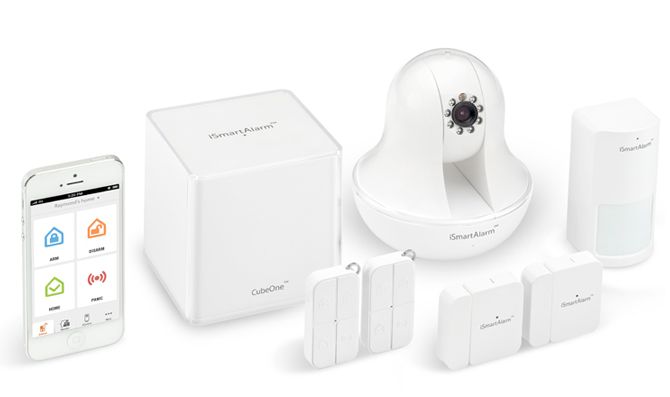
2. iSmartAlarm –Meet one of the DIY smart home security leaders, with no monthly fees and no contracts. This easy-to-install wireless DIY system is great for apartments or small homes. The iSmartAlarm system is almost infinitely expandable via door and window motion sensors, smart switches, and iCamera and iCamera KEEP models with streaming video and video storage. Packages start at $199.
3. Oplink Connected– Oplink Connected is great for a slightly larger home, and provides a premier service for a low monthly fee. The DIY alarm package includes door and window sensors as well as video cameras which are controlled through its mobile app. 
4. SAGE Security & Home Automation– Coming soon — SAGE allows for management of the entire connected home through mobile devices and televisions. The television-centric SAGE system enables consumers to check on children in another room via a video feed, see who rang the doorbell or lower the room temperature — all from the comfort of the TV room couch.
Smart Temperature 
5. Nest Learning Thermostat – Tell a buyer that the home has a Nest thermostat and their ears will perk-up. The Nest Learning Thermostat absorbs its owner’s daily routine and adjusts the temperature accordingly. The Nest thermostat can be controlled through a phone, its built-in sensors detect an empty home allowing Nest to set itself to an energy-efficient temperature. Oh, and it also saves customers about 10 – 12 percent on heating bills and 15 percent on cooling bills per year — a huge win.
6. Honeywell Lyric Thermostat – Honeywell is known for temperature control and their new smart thermostat, the Lyric, is a solid entry into the smart home market. The most talked about advantages of Lyric are its geofencing feature and humidity sensor for more accurate comfort, control and savings. All of these qualities are definitely pluses for families.
7. Canary – This sleek-looking product is mostly about security, but it made this smart temperature list for its ability to monitor air quality, temperature and humidity. It’s cool enough to make an impression with potential buyers, at only $249. The Canary system is available in white, black or silver.
8. Big Ass Fans’ Haiku with SenseME – The world’s most advanced ceiling fan knows exactly when to speed up and when to slow down. Not to mention, it is a gorgeous and luxurious addition to any room. Starting at $1,045 it’s a better fit for luxury homes, but it will certainly set any listing apart.
Smart Safety
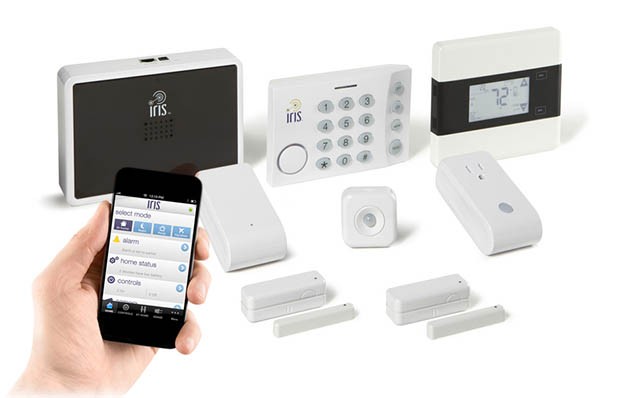
9. Iris Safe & Secure Kit – With Iris, Lowe’s is making it simple for just about anyone to make their home smarter. Feel more confident that families, homes and pets are safe and secure with the DIY, self-monitored home security system. Receive notifications directly to a smartphone, tablet or computer whenever an alarm event is triggered.
10. First Alert Onelink – This suite of smart home safety products is fresh to the market. Included in this offering (and available for presale on Amazon.com) are a Wi-Fi combination smoke and carbon monoxide alarm as well as a watch, both of which send phone notifications if something is amiss. The First Alert Onlink safety products, including the already available Wi-Fi thermostat, will be compatible with Apple’s HomeKit ecosystem.
11. Nest Protect – This smart home device is a smoke and carbon monoxide smart alarm that speaks in a human voice, telling the user if there’s smoke or CO, which room it’s in, and if there is immediate danger. Definitely comforting for families!
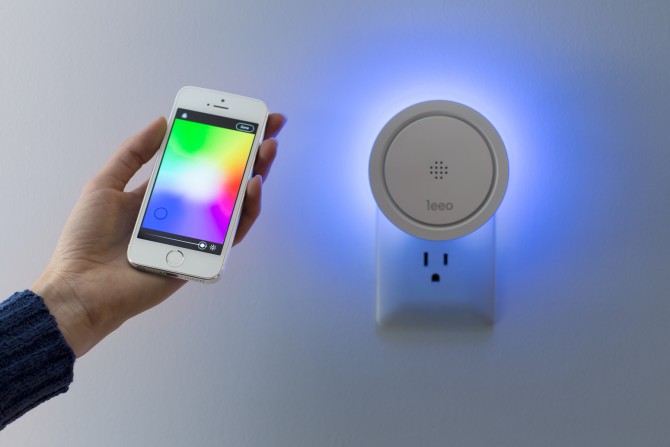
12. Leeo Smart Alert Nightlight – This genius little nightlight keeps track of smoke alarms, carbon monoxide alarms and home climate. If something’s not right, it sends immediate phone notifications.
Smart Lighting 
13. Sengled Pulse Smart Bulb – This combination light and speaker had everyone buzzing at CES 2015. Simply twist the bulb into an existing light socket, download the app and connect to the Pulse bulbs. The Sengled Pulse Smart Bulb can stream music and control lighting at the same time.
14. Lutron Caséta Wireless – This connected home solution allows for lights, battery-powered shades and temperature to be controlled from a mobile device. An easy DIY solution that’s affordable, these products are less than $150. For example, hit “morning,” lights will turn onto a certain level, shades will rise and room temperature is adjusted to the desired level.
15. Philips Hue – Philips Hue delivers more than 16 million colors and all shades of white light to personalize lighting to suit any occasion, mood or moment. With more than 230 apps, Philips Hue can sync lights to music, or even simulate a sunrise effect. Bulbs and lamps are now all controllable via the Hue app or MyHue portal.
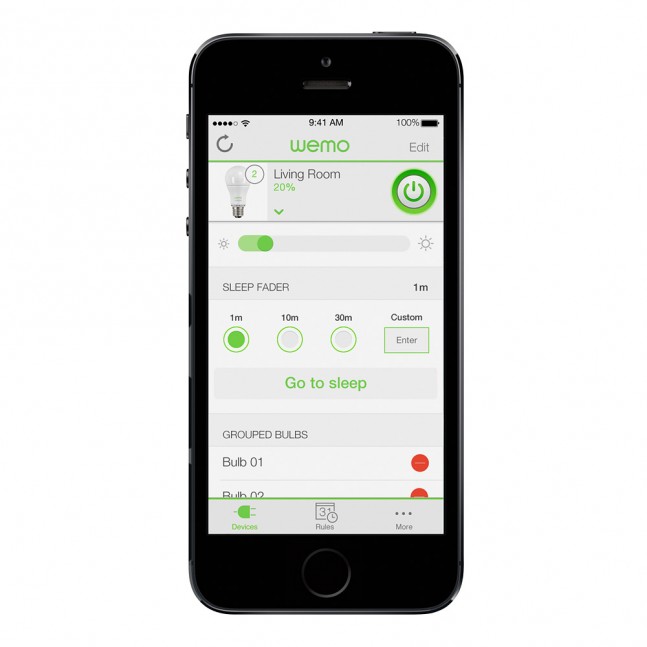
16. Belkin WeMo LED Lighting Starter Set – With this simple starter set, turn lights off-and-on from anywhere, create schedules and dim to create the perfect ambiance. The set includes the WeMo link, which allows users to connect up to 50 WeMo Smart bulbs. Can’t get enough of Belkin WeMo products? Get tricked out with complete Belkin home automation.
Smart Appliances
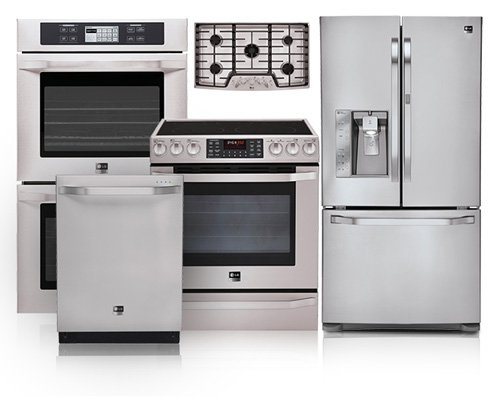
17.LG Studio Collection – LG Studio, LG’s premium line of kitchen appliances, seamlessly blends best-in-class innovation with an uncompromising approach to design. Its full suite of appliances — including refrigerators, cooktops, ranges, ovens and microwaves — delivers integrated and timeless styling, embodying LG’s finest expression of aesthetics and performance.
18. Whirlpool Smart Duet Washer and Dryer – Whirlpool has made it easy to control every load at anytime from anywhere. The Smart Front Washer and Dryer now work with the Nest Learning Technology, helping to keep clothes fresh if the cycle ends while the user is away.
19. LG Mega-Capacity French-Door Refrigerator – LG’s Mega Capacity Refrigerator boasts incredibly impressive size. As the largest in its class, families have room for even the biggest shopping expeditions with space to spare! It also includes the Slim Spaceplus Ice System and the Smart Cooling Plus System, which help keep food fresher, longer. The LG Mega-Capacity Refrigerator includes a 10-year limited warranty.
20. GE ChillHub This first-of-its-kind smart refrigerator has two USB hubs, WiFi and an open-source IOS-compatible app that integrates with the refrigerator by allowing access to sensor data and control of fridge components. The first ChillHub accessory, Milky Weigh, will even tell you how much milk you have left!
Smart Entertainment 
21. N’FINITY PRO HDX Dual Zone Wine Cellars – The N’FINITY PRO is the most advanced wine cellar on the market. Equipped with an energy saving cooling system, telescopic shelving and dual zone cooling, these smart wine cellars will take care of all wine storage needs in the most cost efficient way!
22. Vizio 60″ P-Series Smart TV –This Ultra HD TV is crystal clear and lets users stream popular apps and favorite shows in UHD quality and use UHD playback from next generation cable and satellite receivers, Blu-ray players and more.
23. TCL Roku TV – The TCL Roku TV was released in August 2014 and quickly became a favorite because of its price and comprehensive smart TV features, such as its selection of more than 2,000 streaming channels, easy-to-use interface and simple remote. Recently, Roku announced plans to support 4K UHD streaming in future Roku TV models.
24. DishWorld TV App – The DishWorld app allows viewers to stream live TV on any smart phone, computer or tablet. The app can be used on Roku, Slingbox, Samsung Smart TV, Apple, Windows or Google Play devices.
Connected Home Platform
25. Iris Smart Kit: With so many ways to make a home smart, it can be a lot to digest and manage. Thankfully Lowe’s is making it easy with a single app to manage a Smart Home. Iris offers three starter kits and basic or premium service plans.

What if A Home Inspection Fails?

Home Inspection: What to Do if a House Doesn’t Make the Grade

You’ve found a home that seems perfect, and your offer was accepted. Then you get the bad news: The home inspector found a lot of issues with the property. What should you do when a house doesn’t pass inspection?

A home inspection is an essential part of the process of buying a home. While you don’t technically need to hire someone to inspect the house you’ve made an offer on, having a professional come in and assess the state of the home can save you a considerable amount of stress and money in the long run. A home inspector can find issues that the average person wouldn’t notice in a home and will outline the process involved in fixing those issues.
So what happens if the home inspection unveils a surprising number of problems with the house, from pest damage to structural concerns? You have a few options if your potential dream home doesn’t put its best foot forward during the inspection.
1. Go forward with the sale and pay for repairs yourself. Even if the inspection turns up a variety of problems with the home, you might be so enamored of the property or might be getting a good enough price on it that you decide to continue with the purchase and will cover the cost of repairs out of your own pocket. Before you decide to take care of any problems with the home on your own, it’s helpful to actually read through the inspection report to get a sense of what needs to be done. Contact several licensed contractors in Philly, and ask them to provide price quotes on the type of repairs that you need. Use that information to determine if going ahead with the sale makes sense for your budget and your peace of mind.
2. Work with the seller. It’s fairly common for buyers and sellers to work together and to negotiate who will pay for what when a home inspection turns up a lot of problems. If there are structural problems with the home, if the furnace or air conditioning are broken, or if the home isn’t up to code, it is usually in your best interest to get the seller to cover at least some costs for repairs. Be careful about expecting a seller to pay for minor problems or cosmetic issues, as most won’t. A seller might cover costs in a variety of ways, such as doing the actual repairs him or herself, issuing you a credit for closing costs, or reducing the price of the home to make up for the cost of repairs.
3. Walk away from the home. Provided that your contract with a seller had an inspection contingency clause, you have the option of going nuclear — abandoning the home and the deal — should the inspection reveal more problems than you want to deal with. Look at the anticipated cost of making repairs to the home versus the value of the home. If the cost of those repairs is more than 2 percent of the home’s value, it’s usually not worth going ahead with the sale.
When it comes to having a home inspection, the value of your inspection is only as good as the person who performs it. Your Real Estate Agent should be able to provide a list of reputable home inspectors.

Fall Yard Care Tips You Should Be Doing Now

Fall Yard Care Tips to Do Now

Fall has finally arrived! As you settle into autumn, and the weather begins to cool, it’s important not to neglect your yard. Keep your DFW backyard looking its best year round with our easy fall yard care tips.

Fall has finally arrived! As you settle into autumn, and the weather begins to cool, it’s important not to neglect your yard.
Keep your DFW backyard looking its best year round with our easy fall yard care tips.
Take Care of Your Lawn
Lawns can take quite a beating over the course of a hot DFW summer, so managing your lawn is an important part of fall yard care.
As the weather cools, lawn growth will slow. Make sure to continue mowing your lawn (adjust the mower blade as needed) until it becomes dormant. If any pesky weeds sprung up, get rid of them now or risk having them take over your yard by spring.
It’s also time to overseed with rye grass for a green lawn during winter and to fertilize for a healthier lawn come spring.
Did summer heat and lots of backyard activity compact your yard’s soil? Make it a point to aerate your lawn. Doing so will encourage healthy root systems, plus aerating allows water to penetrate deeper, helping to avoid runoff.
Fall Yard Care Tips: Take Care of Your Lawn
Adjust Your Watering
As temperatures dip, plants and grass need less water. Reduce manual watering and make sure to keep an eye on automatic systems, adjusting them as needed.
Fall is also an excellent time to start practicing water conservation techniques. Set up a rain bucket, if you don’t already have one. When you mow the lawn, don’t bag the clippings. Leave them on your grass to conserve water and naturally fertilize your lawn. And make sure you continue to follow the twice-weekly watering schedules for Dallas, Fort Worth, or your community.
Beautify with New Tress, Shrubs, and Annuals
Fall is the perfect time to whip your yard into ship shape!
Keep your yard looking beautiful by removing wilted summer annuals and replacing them with cool-weather varieties (make sure to fertilize the soil first). You’ll also want to stop fertilizing perennials. This will allow them to rest during winter and be healthier come spring. Replenish mulch around trees and flower beds, as well.
Planning to add trees or shrubs? Fall is a great time to do it. Cooler temperatures and occasional rainfall will help to encourage root growth before it gets too cold. Choose native plants for best results. If you need help deciding what to plant, consult the Earth-Kind Plant Selector.
Fall Yard Care Tips: Beautify with New Trees, Shrubs, and Annuals
Clean Up Debris
Of course, a big part of fall yard care is cleaning up debris, including dead plants or leaves.
Did you know that yard trimmings make up 20 percent of the waste generated by Texans each year? Thankfully, it’s easy to reduce your waste with a few easy tips.
First, there’s no need to remove a few straggling leaves from your lawn. Just mow right over them, and they’ll help to fertilize your lawn.
For yards with more trees, consider starting a compost pile. Compost can be used as mulch, and using it in your yard helps save on your water bills, reduces the need to fertilize (which is better for the environment), and saves you time (no bagging leaves). Simply add your yard waste to a compost pile instead of throwing it out.
You don’t need a lot of space to begin a compost pile. Check out this mulching and composting guide for tips on getting started.

Real Estate Trends for Buying or Selling

Surprising Real Estate Trends that Will Shape the Way You Buy and Sell a Home

When buying or selling a house, one of the first questions that come to mind is either “What do I want in a house?” or “What do buyers want in my house?” The answer to either question may have a surprising link to generational real estate trends.

When buying or selling a house, one of the first questions that come to mind is either “What do I want in a house?” or “What do buyers want in my house?” Though it can be hard to differentiate between wants and needs in real estate, the answer to either question may have a surprising link to generational real estate trends.
The Data
According to data on home buyer and seller generational trends released by the National Association of Realtors, Millennials (those born between 1982 and 2000) continue to comprise the largest contingent of homebuyers, holding 35 percent of the market. Although Millennials are the largest contingent of homebuyers, they spend less time saving for a down payment and have the largest level of educational debt than their home-buying counterparts. The next largest contingent, at 26 percent of the market, is made up of Generation X (those born between 1965 and 1981). These buyers have had a bit more time to pay down student debt, save for a down payment, or gain some equity in their current home — which can provide clues about home buying trends based on age.
Millennials
Millennials are more likely to look for a bargain, with affordability trumping almost every other housing need, and it is one of the major reasons Millennials are flocking to the suburbs, as opposed to urban areas. When selling, that means appealing to the Millennial set that will be looking for walkability, transport links, and neutral spaces to put their stamp on. If buying, especially for the first time, Millennials are more likely to compromise on the size and age of a home before they compromise on price, which provides ample opportunity to build equity through a renovation before moving on to a larger home in the future.
Generation X
Gen Xers, on the other hand, are more likely to move to obtain a larger home for their growing families. When selling, this means playing up livable space in a home and demonstrating how it can support a growing family. Items to focus on are the main living spaces such as the kitchen, living areas, and bathrooms. Proximity to good schools and transportation routes are also good qualities to play up. Gen Xers are also more likely to stay in their homes for a longer period than the Millennial set — meaning Xers are more likely to compromise on price to get the right neighborhood or location.
Baby Boomers
If you’re wondering where the Baby Boomers fit in, it may surprise you to know that the Millennials have recently surpassed Baby Boomers as America’s largest generation, and this demographic shift is reflected in their share of the real estate market. With many Boomers still in the workforce, the real estate trends for this group have been split in two: younger Boomers (born between 1956 and 1964) and older Boomers (born between 1946 and 1955). They have a market share of 16 percent and 15 percent of the market respectively. What makes this generation unique is that they are the ones most likely to move the furthest, obtaining a smaller home and relocating closer to family and friends, and they are willing to pay for the location they want.
The Bottom Line
Across all buying groups, environmentally friendly features ranked as incredibly important, and nearly all generational groups from 30 to 90 began their real estate search online — something potential home sellers should be aware of when preparing their home for sale. No matter who your target market is when selling your home, presenting a neutral space, playing up the local amenities, and including lots of pictures in an online listing will remain critical in a successful sale.

Friday, 7 October 2016

October Home Checklist

To-Dos: Your October Home Checklist

Clean up fallen leaves and branches and get your home ready for more time spent indoors.

houzz logo
Houzz Contributor, Laura Gaskill
The leaves are falling, the farmer’s markets are bustling and the cozy comforts of home beckon — it must be October. Make the most of this month’s bountiful harvest, get some exercise raking leaves in the brisk air and button down your house in preparation for winter. Then sit back, relax and warm your hands around a mug of hot apple cider. Fall is here.
Connor Homes - The Dorothea Harwell House
1. Rake leaves. To make quicker work of collecting leaves from a large lawn, rake the fallen foliage onto a large plastic tarp. Then bag it or add it to your compost pile.
2. Trim dead tree limbs. Dead limbs are more likely to fall during winter storms, making them a potential safety hazard. Have an arborist inspect and trim large trees.
3. If you haven’t already, clean gutters and downspouts. Wait until most of the leaves have fallen to schedule a rain gutter cleaning. Inspect gutters and downspouts for cracks and loose parts and make repairs as needed.
Leschi Remodel
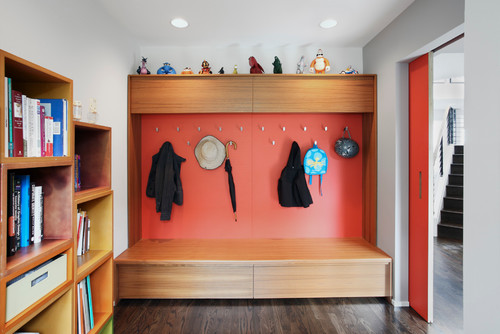
4. Neaten up the mudroom. The back-to-school (and work) flurry can leave the mudroom looking as if a hurricane hit it. Take some time to regain sanity — sort through papers and put away stray summer items and extra coats. Clean the floors and invest in a new doormat if needed. Keep a recycling basket near the entrance to make sorting mail and school papers easier, and dedicate a tote or bin for items that need to be returned (like library books).
Brookline
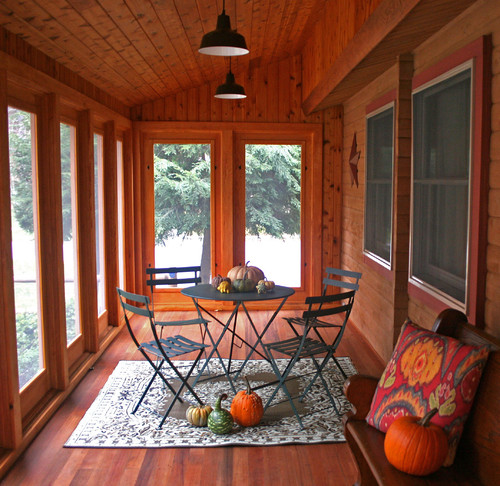
5. Keep seasonal decorating low-key with natural finds. Pumpkins and gourds, fresh heirloom apples, quinces, pomegranates, figs and fall foliage all make wonderfully simple decor.
Bring in cut branches from your yard, stop by a pick-your-own farm or scoop up fall’s bounty at a farm stand.
Stackyard House
6. Maintain your wood stove or fireplace. If you have a fireplace or wood stove, it’s essential for safety that you have it serviced before lighting the first fire of the season. If you haven’t done so already, schedule an appointment to have your chimney inspected and, if necessary, cleaned.
Farmhouse Yellow
7. Check safety devices. Test all smoke and carbon monoxide detectors in the house and replace batteries as needed. Check the expiration date on the kitchen fire extinguisher and replace it if needed.
2015 Kosair Children
8. Start a gift list. It may seem like the holidays are a long way off — but that’s why it pays to start getting organized now. Start a list of everyone you plan to give gifts to this year. Then, as ideas strike, jot them down on your list. You can also use your list to keep track of a holiday gifting budget. And if you want to make any gifts by hand, October is a great time to get started — handmade gifts always seem to take longer to make than expected.
Alderwood Landscape
9. Cover or store outdoor furniture and grills. If you plan to leave your patio furniture or grill outside through the fall and winter, cover them well and stow them beneath an overhang that will protect them from rain and snow. Even if you live in a mild climate, covering your grill between uses is a good idea to protect the finish.
Cherry Street Residence
10. Shut off exterior faucets and store hoses for winter. Disconnect, drain and roll hoses before storing them for the winter. Shut off the water supply to exterior faucets to prevent frozen pipes.
Tell us: What’s on your to-do list this October?
Related Links:

Tuesday, 4 October 2016

Coldwell Banker's Ultimate Service®

Real Estate Consumers Want An Ultimate Service®

In today’s marketplace, Canadian consumers are constantly being inundated with advertising claims from a number of real estate brands, many of which sound very similar from one company to the next.  The consumer is left wondering whether there really is a difference between real estate companies.      

That was a key reason why Coldwell Banker developed Ultimate Service®.  It all starts with listening.  Every customer and every transaction is different.  Only by listening to the customer and truly understanding their individual needs, can you deliver a value proposition that will meet those needs.  

There are three distinct steps to the Ultimate Service marketing process:
-- First, we listen to the customer, to understand their needs and goals.  
-- Second, -- together with the customer -- we develop a customized service plan to meet their needs…and then commit to that service plan, in writing.  We offer a signed pledge to customer satisfaction in the form of our Buyer and Seller service guarantees 
-- And finally, we give our customers an opportunity to evaluate our service in the form of customer satisfaction surveys.  

These satisfaction surveys benefit the consumer in two ways.  First, it provides valuable feedback which allows us to continually evaluate and refine our service offering.  Only by constantly improving can you ensure that your service stays ahead of your customers’ expectations.  

But there’s another way that our survey benefits the consumer - it offers them a proven track record of our performance.  In fact, Coldwell Banker Canada has just earned a 98% overall satisfaction rating from Canadian Home Buyers and Sellers.  And what’s more, we’ve now done it for 14 years in a row! 

This satisfaction rating is unique in the real estate industry.  Why?  Because it’s based on what real, live customers had to say about the service experience delivered by their Coldwell Banker professional.  This 98% satisfaction rating was tabulated by an independent third party company, and is based on the responses of over 55,000 Canadian home buyers and sellers.  No other company in real estate can make that claim.


When you choose Coldwell Banker, you don’t have to take our word for it that we provide outstanding service – just ask our customers!